Bulk Apna Alsi Flax Seed 10lb at Wholesale | Delivering Across Canada
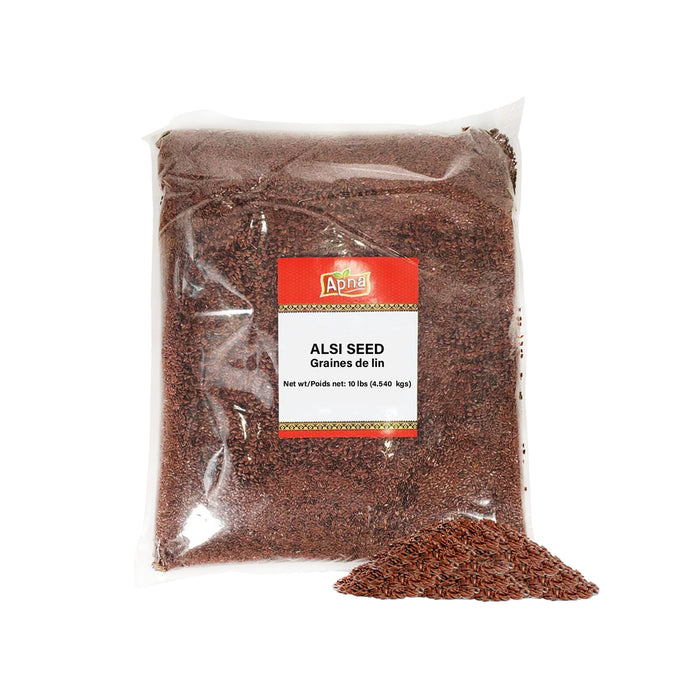
Flax seeds, also known as alsi or linseed, are small oil-bearing seeds available in 10 lb bags or cases containing 40 lbs (4 x 10 lb bags). These seeds are used in commercial food preparation, baking, and food manufacturing applications where their nutritional profile and functional properties serve various culinary purposes.
Common Commercial Applications
Bakeries, health-focused cafes, food manufacturers, and retail establishments incorporate flax seeds into diverse product offerings. The seeds can be used whole, ground, or as an ingredient in finished products.
Typical users include:
- Bakeries producing multigrain breads, bagels, and artisan loaves
- Health-conscious cafes offering smoothies, bowls, and fortified menu items
- Food manufacturers creating granola bars, cereals, and snack products
- Specialty food retailers packaging bulk seeds or custom blends
- Catering companies preparing health-oriented menus and dietary-specific options
- Institutional kitchens in hospitals, schools, and senior living facilities
- Juice bars and smoothie shops adding seeds to blended beverages
- Restaurants featuring plant-based or wellness-focused menus
- Wholesale food distributors supplying ingredients to food service operations
Product Characteristics and Forms
Flax seeds are typically available in two color varieties: brown and golden (yellow). Both types share similar characteristics, with color being the primary visual difference. The seeds measure approximately 4-6 millimeters in length and have a hard outer shell.
Physical characteristics:
-
Size: Small, oval-shaped seeds
-
Texture: Hard, smooth outer coating when whole
-
Appearance: Glossy surface with slight sheen
-
Shelf stability: Whole seeds maintain quality longer than ground flaxseed due to intact seed coat
Whole flax seeds have a mild, slightly nutty flavor that becomes more pronounced when toasted or ground. The seeds contain natural oils that can become rancid if not stored properly, particularly after grinding.
Culinary and Manufacturing Uses
Flax seeds serve multiple functions in commercial food preparation and product development:
Baking applications:
- Added to bread doughs, muffins, and baked goods for texture and appearance
- Used as topping on bagels, rolls, and artisan bread crusts
- Incorporated into cracker and flatbread formulations
- Mixed into pastry doughs and specialty baked items
Beverage and bowl applications:
- Blended into smoothies and protein shakes
- Sprinkled on açai bowls, oatmeal, and yogurt parfaits
- Added to fresh juice blends and wellness drinks
Food manufacturing:
- Component in granola and energy bar production
- Ingredient in breakfast cereals and trail mixes
- Used in coating mixes and breading applications
- Added to vegetarian and plant-based product formulations
Whole vs. ground usage:
- Whole seeds provide texture, visual appeal, and extended shelf life
- Ground seeds (flax meal) integrate more readily into batters and doughs
- Some operations grind seeds on-site to maintain freshness
Packaging Options and Storage
10 lb bag: Suitable for moderate-volume operations, recipe testing, or businesses with limited storage capacity. Single-bag purchasing allows inventory flexibility and rotation management.
Case of 40 lbs (4 x 10 lb): Designed for high-volume users, food manufacturers, or operations with consistent flax seed usage across multiple menu items or product lines. Case purchasing typically provides cost efficiency for bulk users.
Proper storage is essential for maintaining flax seed quality:
- Store whole seeds in cool, dry conditions away from heat and direct sunlight
- Airtight containers help prevent moisture absorption and oxidation
- Refrigerated storage can extend shelf life, particularly in warm climates
- Ground flaxseed requires more careful storage and has shorter shelf life than whole seeds
- Avoid exposure to humidity, which can cause clumping or moisture damage
Operational Considerations for Commercial Buyers
Businesses incorporating flax seeds into their operations should consider several practical factors:
Recipe standardization: Establish consistent measurement protocols (by weight rather than volume) for uniform results across batches
Grinding equipment: Operations grinding seeds on-site need appropriate equipment (spice grinders, food processors, or commercial mills)
Yield calculations: Track usage rates to determine how many finished products each pound produces for accurate cost analysis
Staff training: Ensure kitchen staff understand proper storage, handling, and preparation procedures
Inventory rotation: Implement first-in, first-out practices to maintain product freshness
Allergen management: Some facilities treat flax seeds as an allergen concern and implement appropriate handling protocols
Functional Properties in Food Preparation
Flax seeds exhibit certain functional characteristics relevant to commercial food production:
Binding properties: When ground and mixed with liquid, flax seeds form a gel-like consistency used in some baking applications
Texture contribution: Whole seeds add crunch and visual interest to baked goods and toppings
Moisture absorption: Ground flax can absorb significant moisture in dough and batter formulations
Oil content: The natural oils in flax seeds can affect texture and shelf life of finished products
These properties vary based on seed freshness, grinding method, and integration technique.
Quality Indicators for Commercial Grade Flax Seeds
When evaluating flax seeds for commercial purchase, buyers typically assess:
-
Seed uniformity: Consistent size and color suggest quality processing
-
Clean product: Minimal foreign material, debris, or damaged seeds
-
Aroma: Fresh, mild nutty smell without rancid or off odors
-
Moisture content: Properly dried seeds should be dry to the touch
-
Free-flowing consistency: Seeds should not clump or stick together
Visual inspection and smell testing help verify product quality upon receipt.
Frequently Asked Questions
1. What is the difference between brown and golden flax seeds?
The primary difference is color. Both types have similar characteristics and are used interchangeably in most applications. Some operations choose golden flax for visual reasons in lighter-colored products.
2. Should I buy whole seeds or ground flaxseed?
Whole seeds have longer shelf life and can be ground as needed. Ground flaxseed (flax meal) is more convenient but has shorter shelf life due to exposed oils. Many high-volume operations purchase whole seeds and grind portions as needed.
3. How should flax seeds be stored to maintain freshness?
Store in airtight containers in cool, dry conditions. Whole seeds can be stored at room temperature in proper conditions, though refrigeration extends shelf life. Ground flaxseed should be refrigerated or frozen.
4. Can flax seeds be used as a direct substitute in recipes?
Substitution depends on the specific application. When replacing other seeds or grains, adjustments may be needed for moisture, binding, or texture. Recipe testing is recommended.
5. How much flax seed should I use in baking applications?
Usage rates vary by recipe and desired outcome. Common baking applications use anywhere from 1-3 tablespoons per batch, though formulations differ. Start with established recipes or conduct testing.
6. Do flax seeds need to be ground for use?
It depends on the application. Whole seeds work for toppings, texture, and visual appeal. Ground seeds integrate into batters, doughs, and smoothies more thoroughly. Some applications benefit from grinding, others do not.
7. How long do flax seeds maintain quality?
Shelf life depends on storage conditions. Whole seeds stored properly can maintain quality for extended periods. Ground flaxseed has shorter shelf life. Monitor for off odors or rancid smell, which indicate degradation.
8. Can flax seeds be toasted or roasted?
Yes, light toasting can enhance flavor. Use low heat and monitor carefully, as the oil content can cause burning. Toasted seeds should be used relatively quickly as heat accelerates oil degradation.
9. How many servings can I get from 10 lbs of flax seeds?
Yield depends entirely on usage amounts. A tablespoon of whole flax seeds weighs approximately 10-12 grams. Calculate based on your specific recipe portions and serving sizes.
10. Are there any special handling requirements for flax seeds?
Basic dry goods handling applies. Keep seeds dry, store in appropriate containers, and maintain rotation practices. Some facilities implement allergen protocols for seeds and nuts.
Businesses purchasing flax seeds in bulk should evaluate typical usage patterns, storage capabilities, and whether to buy whole seeds or ground meal based on operational needs. The 10 lb bag format works for moderate-volume users or those testing menu additions, while the 40 lb case suits high-volume operations with established flax seed usage across multiple products. Establishing proper storage protocols and inventory rotation practices helps maintain product quality and operational efficiency.