10" Bagasse Sugarcane Disposable Plates | Canada-Wide Delivery
Product Overview
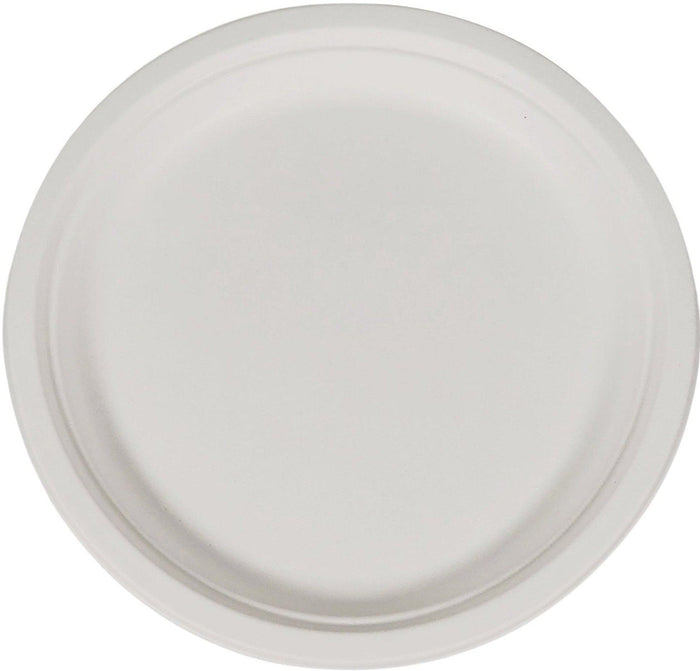
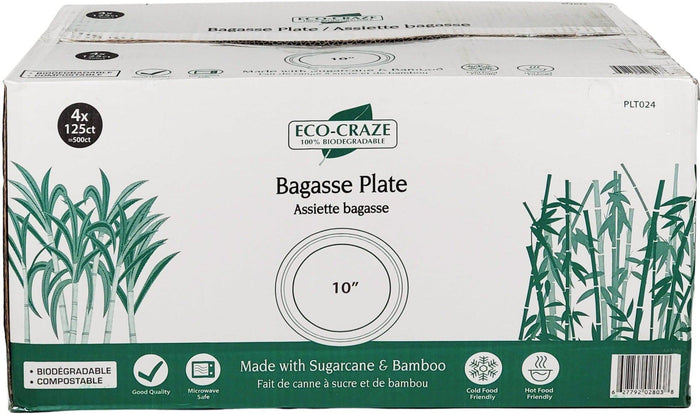
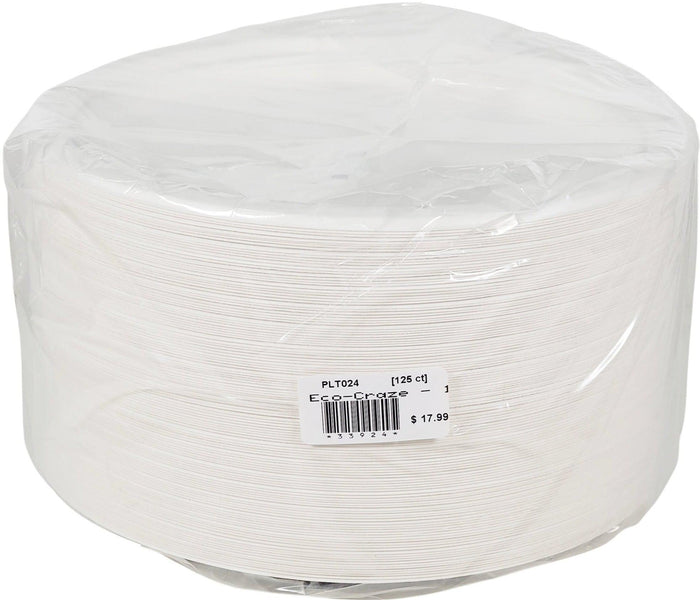
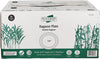
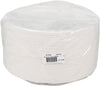
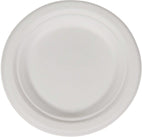
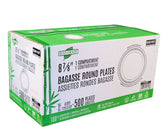
Eco-Craze 10" Bagasse Dinner Plates are single-use dinner plates manufactured from sugarcane bagasse — the dry fibrous residue that remains after sugarcane stalks are processed for juice extraction. Available in cases of 125 count and bulk cases of 4×125 count (500 plates per case), these plates are designed for commercial foodservice operations requiring disposable tableware at scale.
Bagasse plates are widely used across the foodservice industry as an alternative to conventional plastic or foam disposable plates. The 10-inch diameter is a standard dinner plate size, suitable for full entrée portions across a broad range of cuisine formats and service styles.
What Are Bagasse Plates?
Bagasse is an agricultural by-product of sugarcane processing. Rather than being discarded, the fibrous pulp is collected, processed, and moulded under heat and pressure into rigid, food-safe tableware items including plates, bowls, trays, and clamshell containers.
The resulting material produces plates that are sturdier than standard paper plates, with a smooth surface finish on the food-contact side. Bagasse tableware is generally described as compostable under appropriate composting conditions, though operators should verify specific composting certifications and local composting facility acceptance criteria independently before making disposal-related claims to customers.
Sugarcane disposable plates of this type have become a common procurement item for foodservice operations managing sustainability objectives, municipal waste diversion targets, or customer-facing environmental initiatives.
Common Commercial Applications
Eco-Craze 10" Bagasse Dinner Plates are used across a wide range of commercial and institutional food environments, including:
-
Catering companies serving plated meals at corporate events, weddings, and large-scale functions where reusable dishware is not practical
-
Food trucks and carts requiring sturdy, reliable disposable plates that hold up to hot, saucy, or heavy entrée portions
-
Restaurants and cafés operating takeout, delivery, or outdoor patio service programs
-
Festivals and outdoor events where commercial dishwashing infrastructure is unavailable
-
Hospitality and hotel operations managing banquet service, continental breakfast programs, or poolside dining
-
Institutional kitchens in schools, healthcare facilities, and corporate cafeterias with high daily plate turnover
-
Grocery retailers and delis operating prepared food counters or hot food stations
-
Ghost kitchens and meal prep operations packaging portioned meals for delivery
Product Characteristics
| Feature |
Detail |
| Brand |
Eco-Craze |
| Material |
Sugarcane bagasse (plant fibre) |
| Plate Diameter |
10 inches |
| Pack Size |
125 ct per case / 4×125 ct (500 ct) per bulk case |
| Surface |
Smooth food-contact side |
| Colour |
Natural off-white |
| Application |
Hot and cold food service, single-use dining |
The 10-inch plate size accommodates standard dinner portions including proteins, sides, and accompaniments without crowding. The natural off-white colouration is consistent with the unbleached sugarcane fibre and is characteristic of bagasse tableware across the category.
Functional Properties of Bagasse Dinner Plates
Operators selecting bagasse paper plates for commercial use typically consider the following functional characteristics:
-
Rigidity — Bagasse plates are firmer and less prone to flexing under food load compared to standard single-ply paper plates
-
Heat tolerance — Bagasse material is generally suitable for hot foods and can typically withstand microwave use for short reheating periods, though specific heat ratings should be confirmed on product packaging
-
Moisture resistance — The moulded fibre construction provides a degree of resistance to moisture and grease migration, supporting use with sauced, oily, or high-moisture food items
-
Cut resistance — The surface holds up reasonably well to cutlery use during normal dining
-
Stackability — Plates stack compactly for storage and front-of-house dispensing
-
Natural appearance — The off-white, uncoated finish presents a natural aesthetic commonly associated with sustainable foodservice programs
Case Format Options for Commercial Buyers
Eco-Craze 10" Bagasse Dinner Plates are available in two case configurations to support different purchasing volumes:
-
125 ct case — Suited to lower-volume operations, seasonal programs, or operators trialling bagasse tableware before committing to larger quantities
-
4×125 ct case (500 ct) — The bulk case format reduces per-unit cost and is well-suited to high-volume catering, institutional operations, and foodservice accounts with consistent daily plate usage
Both formats are available for wholesale delivery across Canada.
Bulk and Wholesale Buyer Considerations
For commercial buyers procuring sugarcane disposable plates at volume, case quantity planning should account for daily cover counts, event schedules, and available dry storage capacity. Bagasse plates are shelf-stable and store well in a dry environment away from direct moisture, making forward purchasing practical for operations with predictable usage patterns.
Buyers managing sustainability reporting or waste diversion programs should independently verify the composting certifications applicable to this product and confirm acceptance with their local composting facility or waste hauler, as industrial composting infrastructure and acceptance criteria vary across municipalities in Canada.
Frequently Asked Questions (FAQs)
Q: What is bagasse, and where does it come from?
Bagasse is the fibrous plant material that remains after sugarcane is crushed to extract its juice. This by-product is collected and processed into moulded fibre tableware items including plates, bowls, and containers. Using bagasse as a raw material diverts agricultural residue from disposal and avoids the need for virgin tree pulp or petroleum-based plastics in tableware production.
Q: Are bagasse plates the same as paper plates?
Bagasse plates are often referred to informally as bagasse paper plates, but they are technically a distinct product category. Standard paper plates are typically made from wood pulp and are often thinner and more prone to soaking through. Bagasse plates are moulded from compressed plant fibre, which generally produces a firmer, more rigid plate with better moisture and heat resistance than conventional paper plates.
Q: Can bagasse plates be used with hot food?
Yes, bagasse dinner plates are generally suitable for hot food service. They are commonly used with soups, curries, grilled proteins, and other hot entrées. Specific heat tolerances vary by product and should be confirmed on the packaging. Short-duration microwave reheating is commonly cited as compatible, but extended microwave use or oven use is not a typical application for single-use bagasse tableware.
Q: Are Eco-Craze bagasse plates compostable?
Bagasse tableware is generally categorised as compostable material; however, composting conditions, certification standards, and municipal facility acceptance vary across Canada. Buyers and operators should verify the specific composting certifications for this product and confirm with their local waste management service whether the plates are accepted in industrial composting streams in their area.
Q: How do bagasse plates compare to foam or plastic disposable plates?
Bagasse plates are derived from a plant-based, renewable agricultural by-product, whereas foam (polystyrene) and plastic plates are petroleum-based. Foam plates are not accepted in most Canadian composting or recycling programmes. Bagasse plates are increasingly specified in foodservice procurement policies where operators are transitioning away from single-use plastics and foam, particularly in jurisdictions with single-use plastics regulations.
Q: What is the shelf life of bagasse plates in storage?
Bagasse plates are shelf-stable dry goods with a generally long shelf life when stored properly. They should be kept in a cool, dry environment away from moisture, humidity, and direct sunlight. Exposure to damp conditions can affect the structural integrity of moulded fibre tableware over time.
Q: Are the 4×125 ct bulk cases cost-effective for high-volume operations?
The 4×125 ct case format consolidates four inner packs into a single bulk case of 500 plates, which typically supports more efficient inventory management and per-unit cost optimisation for operations with consistent high-volume usage. Specific pricing is available through the wholesale ordering process.
Q: Are these plates available for delivery across Canada?
Yes, Eco-Craze 10" Bagasse Dinner Plates are available for wholesale and bulk delivery across Canada