

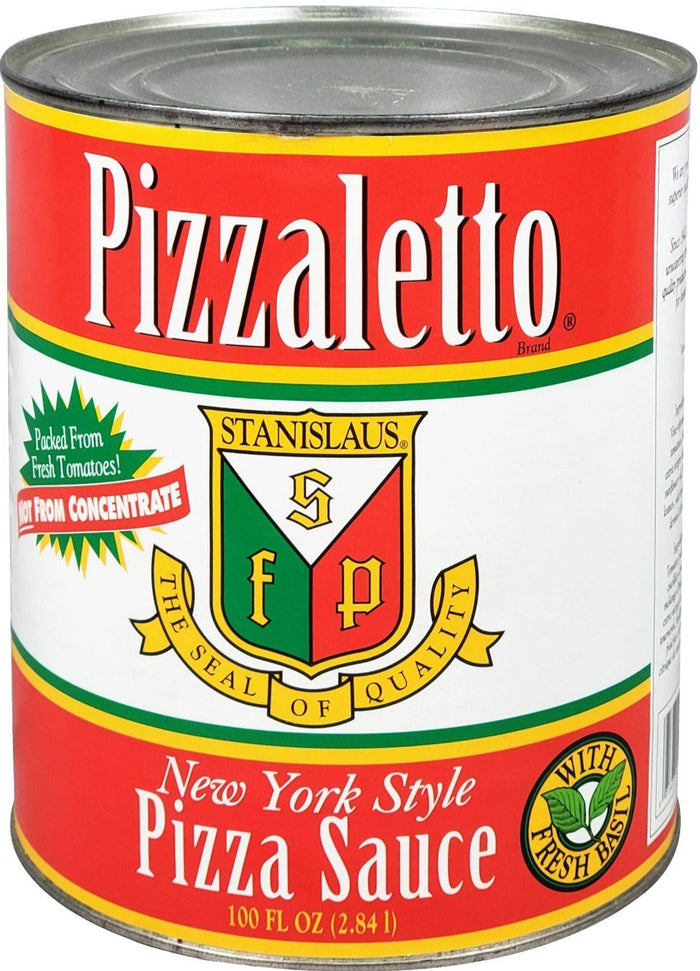
Pizzaletto - Pizza Sauce - w/Basil
CODE: TOM030
Roll over image to zoom in
ONLINE PRICE:
Please see your local cash and carry for in-store pricing.
Pickup and Delivery Options
EXPLORE MORE FROM
 Pizzaletto
Description
Pizzaletto Pizza Sauce w/Basil in Bulk - Canada Wide Delivery
Pizzaletto pizza sauce with basil is a ready-to-use tomato-based sauce available in 100 oz containers or cases containing 600 oz (6 x 100 oz containers) for commercial foodservice operations. This prepared pizza sauce includes basil seasoning and is formulated for high-volume pizza production. Available for delivery across Canada.
Common Commercial Applications
Pizzerias, restaurants, catering operations, and foodservice establishments use prepared pizza sauce for consistent pizza production without in-house sauce preparation. The ready-to-use format eliminates recipe development, ingredient sourcing, and cooking time associated with making sauce from scratch.
Typical users include:
- Pizzerias and pizza restaurants with high-volume production
- Italian restaurants offering pizza alongside other menu items
- Casual dining establishments with pizza sections
- Food trucks and mobile pizza vendors
- Catering companies handling events requiring pizza service
- Institutional kitchens in schools, hospitals, and corporate cafeterias
- Hotels and resorts with pizza offerings
- Sports venues, stadiums, and entertainment facilities
- Quick-service restaurants and fast-casual concepts
- Ghost kitchens and delivery-focused pizza operations
Product Specifications and Characteristics
Container specifications:
- Volume: 100 oz (approximately 2.84 liters) per container
- Case count: 6 containers per case
- Total case volume: 600 oz (approximately 17 liters)
- Product state: Ready-to-use, requires no dilution or additional cooking
- Primary ingredients: Tomatoes, basil, and additional seasonings (refer to label for complete ingredient list)
Product characteristics:
- Red sauce with visible herb flecks
- Tomato-based pizza sauce consistency
- Pre-seasoned with basil
- Pourable but thick enough to spread on dough
- Designed for direct application to pizza bases
The 100 oz container size provides bulk quantity while remaining manageable for kitchen handling and portion control.
Culinary Uses in Commercial Kitchens
Pizza sauce with basil serves multiple applications beyond traditional pizza:
Primary pizza applications:
- Thin-crust and hand-tossed pizza bases
- Deep-dish and pan pizza preparations
- Flatbread and focaccia toppings
- Personal-sized and individual pizzas
- Calzone and stromboli fillings
Extended menu applications:
- Pasta sauce base (may require thinning or enhancement)
- Dipping sauce for breadsticks, garlic knots, and appetizers
- Base for pizza bread and garlic bread
- Component in Italian-American dishes
- Sauce for baked pasta dishes and casseroles
- Marinara-style applications with additional customization
Application considerations:
- Spread directly onto pizza dough without cooking
- Typical application: 4-6 oz per large pizza, adjust by size
- Can be used cold or at room temperature
- No pre-heating required before application
- Additional seasoning can be added for customization
Storage and Handling
Proper storage maintains product quality and food safety:
Unopened containers:
- Store in cool, dry locations
- Room temperature storage suitable before opening
- Check best-by dates on containers
- Implement first-in, first-out rotation
- Avoid exposure to extreme temperatures
After opening:
- Refrigerate immediately after opening
- Transfer to covered containers if not using original packaging
- Use within 7-10 days after opening (verify with product label)
- Do not leave at room temperature for extended periods
- Cover tightly to prevent drying and contamination
Handling considerations:
- Full 100 oz container weighs approximately 6-7 lbs (2.7-3.2 kg)
- Use clean utensils to dispense sauce
- Portion control ladles help standardize pizza sauce amounts
- Wipe container rim after use to maintain seal integrity
Operational Considerations for Commercial Buyers
Businesses using prepared pizza sauce in commercial quantities should account for several practical factors:
Inventory planning: Calculate usage based on daily/weekly pizza production and storage capacity
Labor cost management: Prepared sauce eliminates prep time for cooking, seasoning, and testing homemade sauce
Consistency standards: Ready-made sauce provides uniform flavor across all pizzas and shifts
Portion control: Establish standard sauce amounts per pizza size for cost management
Yield estimation: One 100 oz container yields approximately 16-25 large pizzas depending on application thickness
Menu flexibility: Stock prepared sauce while offering customization through additional toppings and seasonings
Quality monitoring: Conduct regular taste tests to ensure sauce meets operational standards
Cost analysis: Compare prepared sauce costs against labor, ingredients, and time for homemade alternatives
Ready-Made Sauce vs. Homemade Sauce
Understanding differences between prepared and house-made pizza sauce helps in operational decisions:
Ready-made pizza sauce:
- No cooking or preparation required
- Consistent flavor and quality
- Immediate availability for service
- Reduces kitchen labor and complexity
- Standardized ingredient profile
- Fixed cost per container
Homemade pizza sauce:
- Allows complete recipe control and customization
- Requires cooking equipment, time, and skilled labor
- Ingredient costs may vary with market prices
- Supports "made from scratch" marketing claims
- Requires recipe development and testing
- Variable consistency between batches
Many operations use prepared sauce for efficiency while differentiating through crust quality, cheese selection, and topping combinations.
Container Size and Case Considerations
100 oz container:
- Suitable for moderate to high-volume pizza operations
- Manageable size for kitchen staff handling
- Reduces reordering frequency compared to smaller cans
- Once opened, amount is practical for use within recommended timeframe
- Fits in standard refrigeration after opening
Case of 600 oz (6 x 100 oz):
- Cost efficiency through bulk purchasing
- Reduces delivery frequency
- Appropriate for high-volume pizzerias and multi-unit operations
- Requires adequate storage space
- Longer shelf life when sealed supports inventory management
Quality Indicators for Pizza Sauce
When evaluating prepared pizza sauce, commercial buyers typically assess:
- Consistency: Spreadable but not watery; clings to dough without sliding
- Color: Rich red tomato color without browning or darkening
- Flavor balance: Tomato taste complemented by basil and seasonings
- Aroma: Fresh tomato and herb scent without off-odors
- Texture: Smooth or slightly chunky depending on style; no separation
- Salt level: Balanced seasoning appropriate for finished pizza
Conducting product trials before committing to large orders helps verify the sauce meets operational and customer preference standards.
Frequently Asked Questions
Does Pizzaletto pizza sauce need to be cooked before using?
No, this pizza sauce is ready to use. It is designed to be spread on pizza dough and cooked with the pizza. No pre-cooking or heating is required before application.
How much pizza sauce should I use per pizza?
Usage varies by pizza size and style. Typical amounts: 3-4 oz for small (10-12"), 4-5 oz for medium (14"), 5-7 oz for large (16-18"). Adjust based on customer preferences and crust thickness.
Can I add ingredients to customize this pizza sauce?
Yes, operators can enhance the sauce with additional garlic, oregano, red pepper flakes, or other seasonings to create signature flavors while maintaining the convenience of a prepared base.
How many pizzas can I make from one 100 oz container?
Yield depends on pizza size and sauce application thickness. At 5 oz per pizza, one container makes approximately 20 pizzas. At 6 oz per pizza, approximately 16-17 pizzas.
What is the shelf life of unopened pizza sauce?
Shelf life varies by product; check the best-by date printed on each container. Unopened containers typically maintain quality for several months when stored properly at room temperature.
How long does pizza sauce last after opening?
Once opened and refrigerated, pizza sauce typically maintains quality for 7-10 days. Always refer to product labeling for specific guidance and monitor for any changes in appearance, smell, or taste.
Can this sauce be used for pasta dishes?
While formulated for pizza, it can serve as a base for pasta sauce. It may require thinning with water or broth and enhancement with additional seasonings depending on desired flavor profile.
Is pizza sauce with basil the same as marinara sauce?
Pizza sauce and marinara sauce differ in consistency and seasoning. Pizza sauce is typically thicker, less cooked, and designed to bake with the pizza. Marinara is thinner, fully cooked, and used as a finishing sauce.
Should pizza sauce be applied to dough before or after adding cheese?
Standard practice applies sauce directly to dough first, then adds cheese and toppings. This prevents dough from becoming soggy and allows sauce flavors to integrate during baking.
Can pizza sauce be frozen for extended storage?
Freezing is possible but may affect texture upon thawing. If freezing, use airtight containers and allow adequate thawing time in refrigeration. Quality may vary compared to fresh refrigerated product.
Businesses purchasing Pizzaletto pizza sauce with basil in 100 oz containers or cases should evaluate typical pizza production volume, available refrigeration space after opening, and operational workflow needs. The prepared sauce format works for operations ranging from small pizza cafes to high-volume pizzerias, providing labor savings and consistency while allowing menu customization through additional ingredients and topping selections. Establishing portion control standards, proper storage protocols, and inventory rotation practices helps maintain product quality and cost efficiency across Canadian foodservice operations.
SIMILAR PRODUCTS
DISCLAIMERS
Prices displayed on the website are valid for online purchases only. Please see your local cash and carry for in-store pricing.
Please allow for 1 day delay in delivery.
Refunds are processed on Friday of each week. In case you need a refund sooner, please Contact Us.
Frozen products are delivered at a cooler temperature.
Free bulk local delivery is available on orders as low as $550 (pre-tax, selected cities)
Please note, additional delivery charges may be required based on accessibility of your location, proximity of your location to our delivery routes, nature of your order. We will notify you if additional charges apply before your delivery.
CUSTOMER REVIEWS